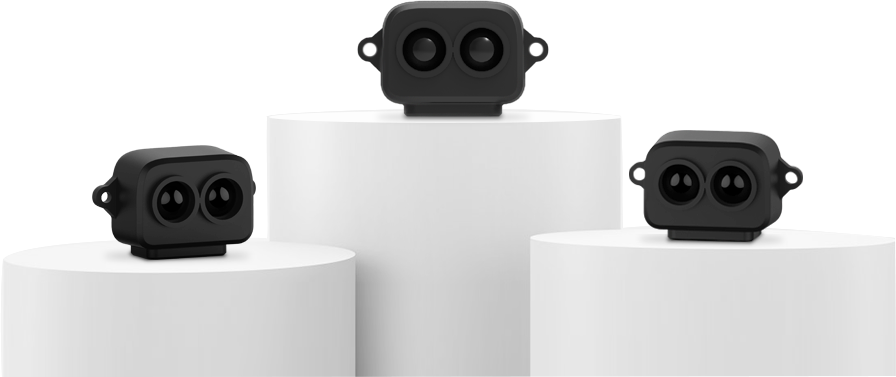

TF-Luna8 m Low Cost LiDAR Distance Sensor
TF-Luna supports compact, low-power short-range single-point integration for proximity triggers and assistive-focus distance input in controlled mounting positions.
Key specifications
- Measuring range
- 0.2 ~ 8 m
- Frame rate
- 1 ~ 250 Hz
- Interface
- UART,I/O,I²C
- Protection
- Without enclosure; external environmental protection required
Need help confirming a selection or purchase details?
Applications


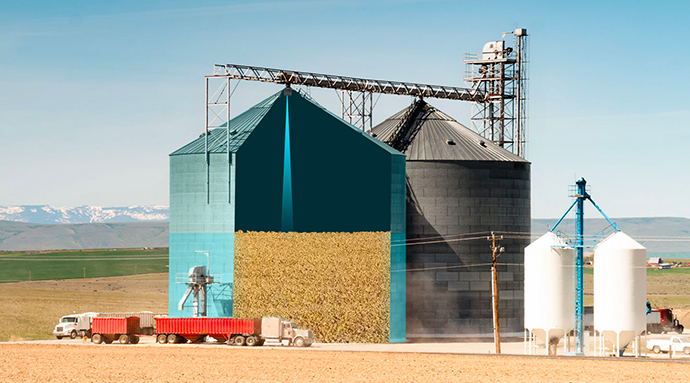
Level Detection

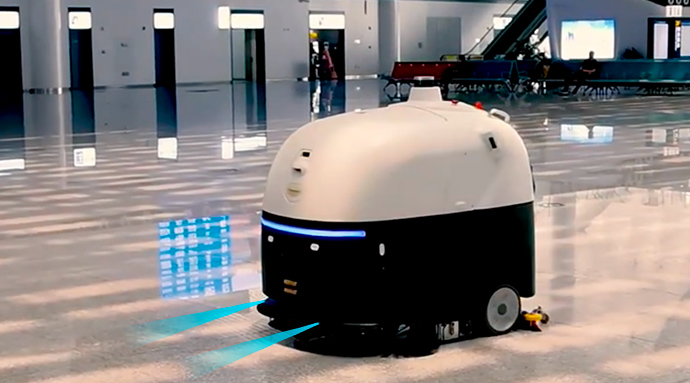
Robot Fall Prevention & Obstacle Avoidance

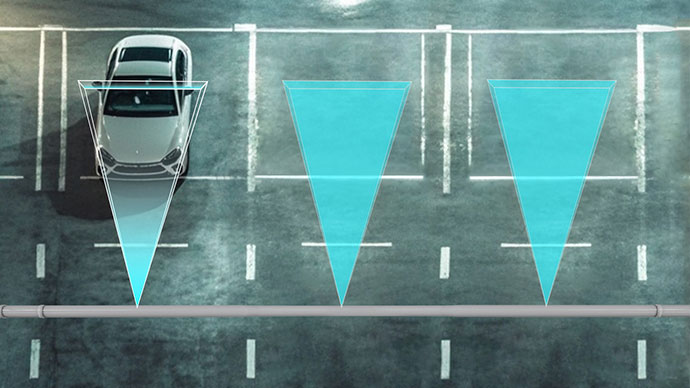
Smart Parking
Full specifications
| Parameter | Value | Parameter | Value |
|---|---|---|---|
| Measuring range | 0.2 ~ 8 m | Detecting accuracy | ± 6 cm @ (0.2 ~ 3 m) ± 2% @ (3 ~ 8 m) |
| Frame rate | 1 ~ 250 Hz | Interface | UART,I/O,I²C |
| Protection | Without enclosure; external environmental protection required | Dimensions | 35 mm × 21.25 mm × 12.5 mm |
| Power consumption | ≤ 0.35 W | Weight | < 5 g |
| Field of view | 2° | Output data | Single-point Distance Value |
| Operating voltage | 3.7 ~ 5.2 V |
Applicable scope and usage limits
Applicable scenarios
- Evaluate TF-Luna when equipment needs one short-range distance and prioritizes power and installation space.
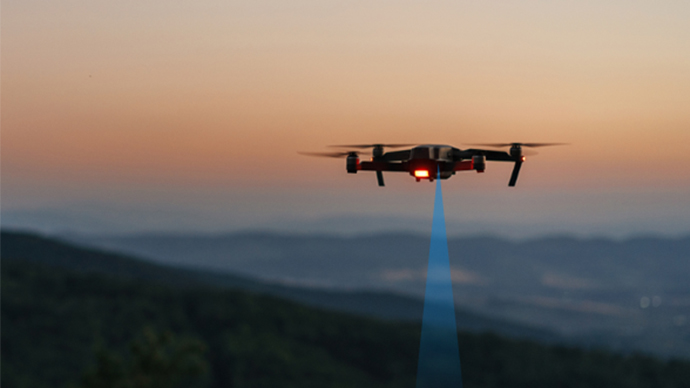
- It suits defined measurement paths for proximity triggers, assistive focus and local downward ranging.
Conditions
- TF-Luna has no protective enclosure, so the host must provide environmental protection.
- Validate returns and usable range on dark, transparent or mirror-like targets instead of designing only around the 8 m headline.
Not applicable scenarios
- For a short-range module with an environmental enclosure, compare TFmini-S or TFmini Plus.
- For horizontal coverage, compare TF-NOVA or NOVA20.
- Robot mapping or object volume tasks require a solution that supplies the necessary spatial data.
Short-range single-point sensing: power, weight and spot size
All three supply one directional distance. Confirm the actual target and working distance, then compare host protection, payload and useful spot width. Mapping or separate directional information first calls for a different sensing type.
View comparison topicLow mass with a protected short-range module
Compare the approximately 5 g TFmini-S with its 2° field and IP65 for downward UAV ranging or directional sensing in small equipment.
Boundary: Validate the spot on small targets near backgrounds. The specified 12 m range is not usable distance over every ground surface.
View model detailsMore mass is acceptable for a wider spot
Compare TFmini Plus when about 12 g is acceptable and a 3.6° field helps cover the target area.
Boundary: The wider field may include both target and background. It still outputs one distance rather than independent channels.
View model detailsPower comes first, with host-provided protection
For short-range proximity or assistive focus needing one distance, compare TF-Luna for low power and compact mounting.
Boundary: It has no protective enclosure. For water or dust exposure, compare enclosed models or provide defined host protection.
View model details| Parameter | TFmini-S | TFmini Plus | TF-Luna |
|---|---|---|---|
| Measuring range | 0.1 ~ 12 m | 0.1 ~ 12 m | 0.2 ~ 8 m |
| Detecting accuracy | ± 6 cm @ (0.1 ~ 6 m)± 1% @ (6 ~ 12 m) | ± 5 cm @ (0.1 ~ 5 m)± 1% @ (5 ~ 12 m) | ± 6 cm @ (0.2 ~ 3 m) ± 2% @ (3 ~ 8 m) |
| Frame rate | 1 ~ 1000 Hz | 1 ~ 1000 Hz | 1 ~ 250 Hz |
| Interface | UART,I/O,I²C | UART,I/O,I²C | UART,I/O,I²C |
| Protection | — | IP65 | Without enclosure; external environmental protection required |
| Dimensions | 42 mm × 15 mm × 16 mm | 35 mm × 18.5 mm × 21 mm | 35 mm × 21.25 mm × 12.5 mm |
| Power consumption | ≤ 0.7 W | 550 mW | ≤ 0.35 W |
| Weight | 5 ± 0.3 g | 12 ± 1 g | < 5 g |
| Field of view | 2° | 3.6° | 2° |
| Operating voltage | 5 ± 0.1 V | 5 ± 0.5 V | 3.7 ~ 5.2 V |
FAQ
What is the measurement range of the TF-Luna?
The TF-Luna operates from 0.2m to 8m with 90% reflectivity in both indoor and outdoor conditions, and 0.2m to 2.5m with 10% reflectivity. Range varies based on target reflectivity and ambient light; the 8m maximum assumes a standard white board (90% reflective) tested indoors at 25°C. For lower-reflectivity targets (10%), maximum range drops to 2.5m.
What communication interfaces does the TF-Luna support?
The TF-Luna supports three interfaces: UART (default 115200 baud, adjustable), I²C (slave mode with 400kbps maximum transmission rate and default address 0x10), and I/O. The communication level is LVTTL (3.3V logic), and the I²C address range is 0x08–0x77, allowing multiple sensors on the same bus.
Which tasks suit TF-Luna, and why choose it?
Evaluate TF-Luna when equipment needs one short-range distance and prioritizes power and installation space. It suits defined measurement paths for proximity triggers, assistive focus and local downward ranging.
What are the accuracy and precision specifications?
The TF-Luna delivers ±6cm accuracy at distances 0.2m–3m and ±2% accuracy from 3m–8m, with a distance resolution of 1cm. These specifications are based on indoor testing with a standard white board (90% reflectivity) at 25°C, representing best-case conditions for high-reflectivity targets.
What are the operating temperature and environmental specifications?
Operating temperature ranges from -10°C to +60°C, with storage temperature from -20°C to +75°C. Benewake’s official catalog lists TF-Luna as without enclosure; ABS+PC in the English datasheet describes structural material and does not establish an environmental protection rating. It tolerates ambient light up to 70Klux (approximately outdoor daylight equivalent) without range degradation, ambient-light tolerance does not provide environmental protection; outdoor or water/dust-exposed installations require external protection and validation of mounting conditions.
What power supply does the TF-Luna require?
The TF-Luna requires a 3.7V–5.2V supply with average current ≤70mA and peak current of 150mA, consuming ≤0.35W on average. This low power budget enables integration into battery-powered systems including drones, mobile robots, and handheld devices without significant power management concerns.
What are the physical dimensions and weight?
The TF-Luna measures 35mm (L) × 21.25mm (W) × 12.5mm (H) and weighs less than 5g, making it one of the most compact single-point LiDAR modules. Its minimal footprint and weight make it ideal for space-constrained applications like UAV payload integration and embedded IoT systems.
When should an alternative to TF-Luna be considered?
For a short-range module with an environmental enclosure, compare TFmini-S or TFmini Plus. For horizontal coverage, compare TF-NOVA or NOVA20. Robot mapping or object volume tasks require a solution that supplies the necessary spatial data. TF-Luna has no protective enclosure, so the host must provide environmental protection. Validate returns and usable range on dark, transparent or mirror-like targets instead of designing only around the 8 m headline.
How should TF-Luna be compared with other models or sensing approaches?
Choose TF-Luna for compact, low-power short-range input. TFmini-S adds specified range and IP65, while TFmini Plus has a wider field of view. Trade off real working distance, target size, protection and power rather than assuming more range is always better.
What platforms and systems does the TF-Luna integrate with?
The TF-Luna integrates with Arduino (UART/I²C via serial shields), ROS (community drivers available for UART), Pixhawk autopilots (via rangefinder MAVLink protocol over UART), and industrial PLCs (via UART/I²C) through standard communication protocols. The LVTTL (3.3V) logic level is compatible with most microcontroller ecosystems; users may need level shifters for 5V systems. Default UART at 115200 baud and I²C slave at 0x10 are immediately usable in embedded and robotics stacks.
How can I switch a sensor back to UART when it is in I2C mode and I have no I2C tool?
Use a USB-to-I2C adapter such as CH341 and BW_CheckWINCC to send the switch command. Some models also support the hardware method on PIN5. TFmini-S, TFmini Plus, and TF02-Pro commonly select I2C with PIN5 tied to GND; follow the model manual to remove that connection or send the matching command when returning to UART.
What should I check when TFmini-S or TF-Luna I2C communication does not work with Pixhawk?
Check the I2C selection state on PIN5, the default address 0x10, and the Pixhawk parameters RNGFND1_TYPE=20 and RNGFND1_ADDR=0x10. Share a common ground, keep the I2C cable at or below 40 cm where possible, and verify power, pull-ups, and wiring order.
Is it a bug if TF-Luna v3.3.1 always reports FPS register 0x0000?
Yes. It is a confirmed firmware issue in v3.3.1: the register can read 0x0000 regardless of the actual frame rate. It is fixed in v3.5.1; update early-batch devices according to the model upgrade instructions.
EVIDENCE
TF-Luna
City University of Hong Kong + The University of Tokyo + University of Macau
- Institution
- City University of Hong Kong + The University of Tokyo + University of Macau
- Model
- TF-Luna
- Use
- City University of Hong Kong + The University of Tokyo + University of Macau. Three TF-Luna modules. Original source pages and citations.
- Provenance
- Science Advances 11, eadt6041 2025 DOI: 10.1126/sciadv.adt6041
- Attribution
- Model-level: model named in the source