

Space & People Flow Detection
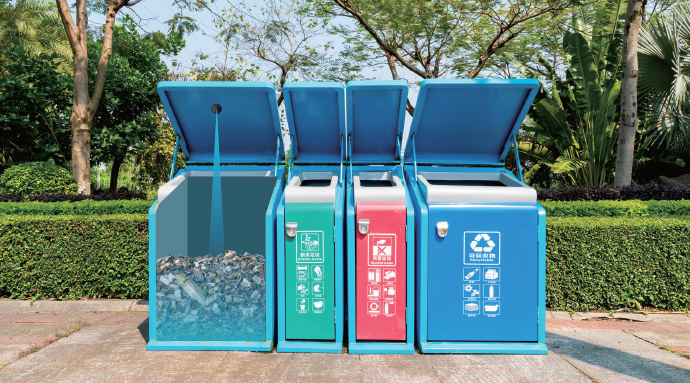
Using LiDAR to monitor space occupancy or conduct foot traffic statistics in densely populated places such as malls and schools can improve operational efficiency and reduce management costs.
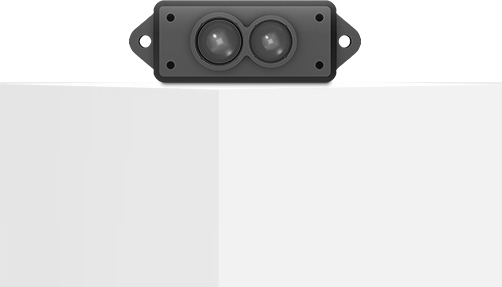
TFmini-S is a low-cost, compact, and lightweight micro LiDAR sensor with an enhanced frame rate. This mini LiDAR has versatile interfaces for various platforms, catering to diverse customer needs in short-range applications.
Key specifications
Need help confirming a selection or purchase details?
| Parameter | Value | Parameter | Value |
|---|---|---|---|
| Measuring range | 0.1 ~ 12 m | Detecting accuracy | ± 6 cm @ (0.1 ~ 6 m)± 1% @ (6 ~ 12 m) |
| Frame rate | 1 ~ 1000 Hz | Interface | UART, I/O, I²C |
| Protection | 未注明 | Dimensions | 42 mm × 15 mm × 16 mm |
| Power consumption | ≤ 0.7 W | Weight | 5 ± 0.3 g |
| Field of view | 2° | Output data | Single-point Distance Value |
| Operating voltage | 5 ± 0.1 V |
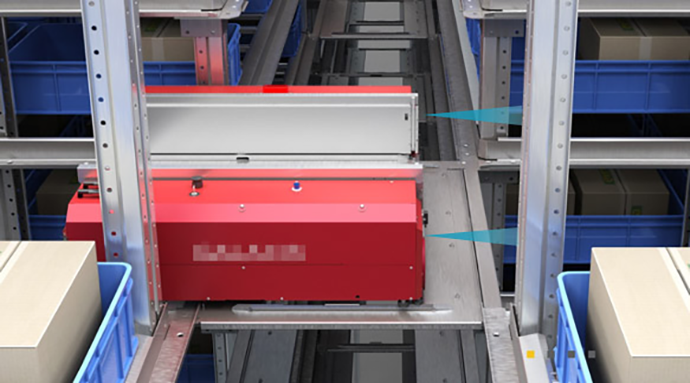
Suitable for UAV altitude hold and terrain following up to 12 m, short-range AGV/AMR obstacle detection and indoor robot navigation.
Condition: Bounded by the range, accuracy and operating conditions in the product datasheet.
TFmini-S is not intended for measurements beyond this model's datasheet range, accuracy or interface limits, and is not a substitute for certified redundant safety systems.
Condition: If the target requirement exceeds the specification boundary, complete a selection review or contact technical support first.
All three models output one distance point. Check target reflectivity, real distance, mounting environment and power first, then compare weight, power, protection and field of view; the same headline range does not imply the same result for every target or environment.
View comparison topicTFmini-S is about 5 g and is currently specified at 0.1–12 m with rates up to 1000 Hz and UART, I²C and I/O, fitting payload- and space-constrained single-point ranging.
Boundary: Usable range changes with target reflectivity and environment; current material does not state an enclosure protection rating, so outdoor use needs system-level protection and mounting validation.
View model detailsTFmini Plus is also a 0.1–12 m single-point sensor; current parameters list IP65 and a 3.6° field of view. Consider it when the platform can accept about 12 g and those protection and coverage traits matter.
Boundary: A wider field of view is not scanning or multi-channel output; dark targets, strong ambient light and out-of-range readings still require validation against specified conditions.
View model detailsTF-Luna is currently specified at 0.2–8 m, under 5 g and no more than 0.35 W, fitting short-range single-point input in a controlled mounting position.
Boundary: 3.3 V refers to the communication logic level, not the specified supply; the supply range is 3.7–5.2 V, and an unenclosed installation needs separate protection.
View model details| Parameter | TFmini-S | TFmini Plus | TF-Luna |
|---|---|---|---|
| Measuring range | 0.1 ~ 12 m | 0.1 ~ 12 m | 0.2 ~ 8 m |
| Detecting accuracy | ± 6 cm @ (0.1 ~ 6 m)± 1% @ (6 ~ 12 m) | ± 5 cm @ (0.1 ~ 5 m)± 1% @ (5 ~ 12 m) | ± 6 cm @ (0.2 ~ 3 m) ± 2% @ (3 ~ 8 m) |
| Frame rate | 1 ~ 1000 Hz | 1 ~ 1000 Hz | 1 ~ 250 Hz |
| Interface | UART, I/O, I²C | UART, I/O, I²C | UART, I/O, I²C |
| Protection | 未注明 | IP65 | Without enclosure |
| Dimensions | 42 mm × 15 mm × 16 mm | 35 mm × 18.5 mm × 21 mm | 35 mm × 21.25 mm × 12.5 mm |
| Power consumption | ≤ 0.7 W | 550 mW | ≤ 0.35 W |
| Weight | 5 ± 0.3 g | 12 ± 1 g | < 5 g |
| Field of view | 2° | 3.6° | 2° |
| Operating voltage | 5 ± 0.1 V | 5 ± 0.5 V | 3.7 ~ 5.2 V |
The TFmini-S achieves 12 m range at 90% reflectivity and 7 m at 10% reflectivity in standard conditions. Under high ambient light (70 Klux), the same range specifications are maintained. The minimum detection range (blind zone) is 0.1 m, which is shortened from earlier TFmini versions.
The TFmini-S supports three communication interfaces: UART (default 115200 baud, adjustable 9600-921600 bps), I2C (400 kbps max transmission rate, default address 0x10), and digital I/O. Frame rate is adjustable from 1-1000 Hz over UART/I/O, and 1-100 Hz over I2C.
The TFmini-S is optimized for pedestrian detection, vehicle detection, intelligent barrier gate systems, and altitude measurement in drones. Its high frame rate (up to 1000 Hz), short blind zone (10 cm), and compact form factor make it ideal for real-time proximity sensing and mobile robotics applications.
The TFmini-S provides ±6 cm accuracy at 0.1-6 m range and ±1% accuracy at 6-12 m range, with 1 cm distance resolution. Accuracy is calculated on a standard white board (90% reflectivity) at 25°C; field conditions and surface reflectivity variations may increase errors.
The TFmini-S operates in the range 0°C to 60°C and resists up to 70 Klux ambient light (strong outdoor sunlight). It is classified as Photobiological Safety Class 1 per EN60825. Storage temperature range is -20°C to 75°C; no IP rating is specified, so it is not rated for immersion or spray protection.
The TFmini-S requires a 5V ±0.1V power supply with average current consumption ≤140 mA (peak 200 mA, typical power <0.7 W). Communication is LVTTL at 3.3V logic levels. This low power profile makes it suitable for battery-powered and low-power embedded systems.
The TFmini-S measures 42 mm (L) × 15 mm (W) × 16 mm (H) and weighs 5 g ±0.3 g, housed in durable PC/ABS plastic. The integrated 10 cm cable is pre-attached. This compact, lightweight form factor fits easily into UAV payloads, robotic arms, and confined spaces.
The TFmini-S is not suitable for outdoor detection of low-reflectivity objects beyond 7 m or safety-critical applications (it lacks IP rating and is Class 1 laser, not safety-rated like SICK scanners). It is also unsuitable for imaging applications requiring full 2D/3D point clouds—use a multi-beam LiDAR instead. Performance degrades significantly with glass, transparent, or highly reflective surfaces.
Compared to the TF-Luna (8 m range, 5 g), the TFmini-S extends range to 12 m and improves reflectivity robustness. Versus TF02-Pro (40 m range), the TFmini-S trades some range for a shorter 10 cm blind zone and lower power (<0.7W vs. ~1W), making it better for proximity and altitude applications where range <12 m suffices.
The TFmini-S integrates via UART and I2C with Arduino, Raspberry Pi, PLC systems, and embedded Linux platforms. The configurable frame rate (1-1000 Hz), standard UART protocol, and I2C slave mode enable drop-in integration with ROS stacks, Pixhawk flight controllers, and real-time systems without special drivers or libraries.
Use a USB-to-I2C adapter such as CH341 and BW_CheckWINCC to send the switch command. Some models also support the hardware method on PIN5. TFmini-S, TFmini Plus, and TF02-Pro commonly select I2C with PIN5 tied to GND; follow the model manual to remove that connection or send the matching command when returning to UART.
Check the I2C selection state on PIN5, the default address 0x10, and the Pixhawk parameters RNGFND1_TYPE=20 and RNGFND1_ADDR=0x10. Share a common ground, keep the I2C cable at or below 40 cm where possible, and verify power, pull-ups, and wiring order.
TFmini Plus is specified up to 12 m at 90% reflectivity. Readings above 1200 cm are outside the factory-calibrated range and should not drive control or safety decisions; filter out-of-range data according to the model specification.
A deviation of a few centimeters can result from multipath reflections when the spot crosses a curved edge. A deviation of 1 m or more needs investigation. Keep the spot fully on the target and capture 9-byte raw data including strength for analysis.
The value represents the intensity of the returned laser pulse and normally decreases with distance. Values above 100 can be a general reference; 0x5959 (decimal 22873) is an example of a healthy return, while 65534 and 65535 usually indicate no valid return. Interpret it together with target material and distance.
A nearby infrared source, such as a security camera illuminator, is a common cause. Capture 9-byte raw data including strength, temporarily disable or shield the suspected source, then add shielding, relocate the sensor, or revise the installation.
Electromagnetic compatibility interference may be involved. Increase the physical separation between the sensor and GPS antenna, then consider EMI shielding and power/ground improvements. Validate again in the final system installation.
Check TX/RX, power, and common ground first. With ArduPilot, confirm RNGFND1_TYPE=20 and RNGFND1_ADDR=0x10 for I2C. Validate the hardware with ArduPilot before investigating PX4 driver compatibility; TF03 CAN also needs 250 kbps and 120Ω termination at both ends.
TFmini-S
TFmini-S
TFmini-S
TFmini-S
TFmini-S