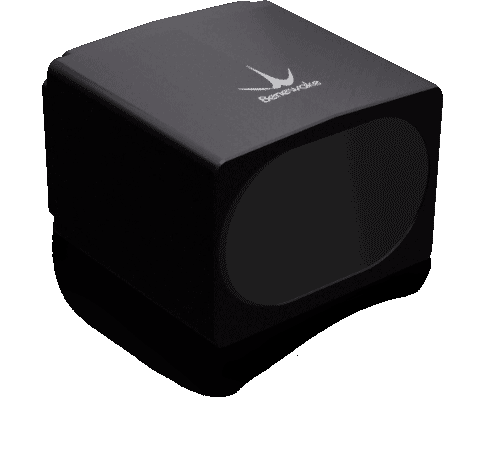

TF03180 m IP67 LiDAR
TF03 supports enclosed outdoor long-range single-point measurement with IP67 and multiple interfaces for equipment spacing, road triggers and directional UAV input.
Light Weight
Compact Design
High Accuracy
Long Range
Low Power Consumption
Key specifications
- Measuring range
- 0.1 ~ 180 m
- Frame rate
- 1 ~ 9800 Hz
- Interface
- UART,CAN,RS-232,RS-485
- Protection
- IP67
Need help confirming a selection or purchase details?
Applications


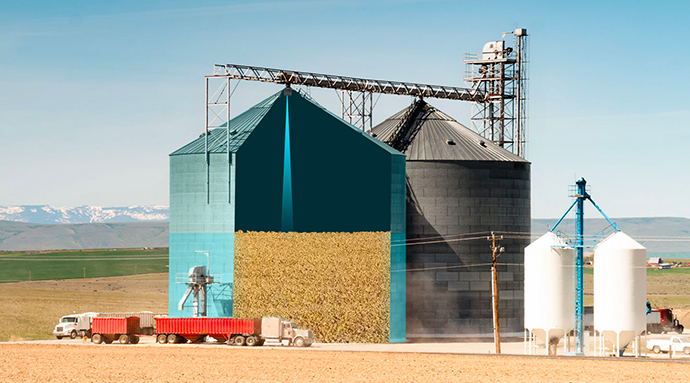
Level Detection

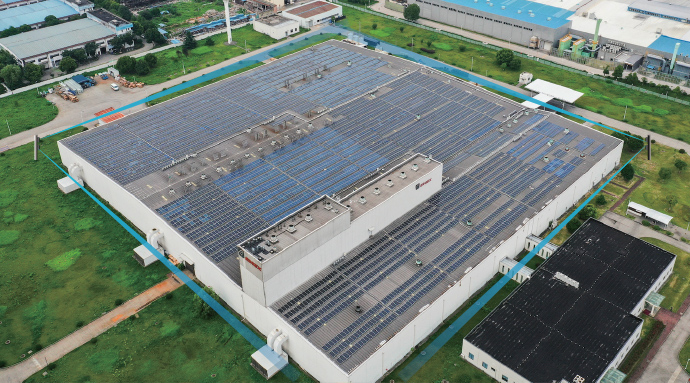
Security Warning
Full specifications
| Parameter | Value | Parameter | Value |
|---|---|---|---|
| Measuring range | 0.1 ~ 180 m | Detecting accuracy | ± 10 cm (≤ 10 m)1% (> 10 m) |
| Frame rate | 1 ~ 9800 Hz | Interface | UART,CAN,RS-232,RS-485 |
| Protection | IP67 | Dimensions | 44 mm × 43 mm × 32 mm |
| Power consumption | ≤800 mW | Weight | 86 ± 3 g |
| Field of view | 0.5° | Output data | Single-point Distance Value |
| Operating voltage | 5 ~ 24 V |
Applicable scope and usage limits
Applicable scenarios
- Evaluate TF03 when outdoor equipment needs long-range directional input, a protective enclosure and compatible interfaces, and can accept about 86 g.
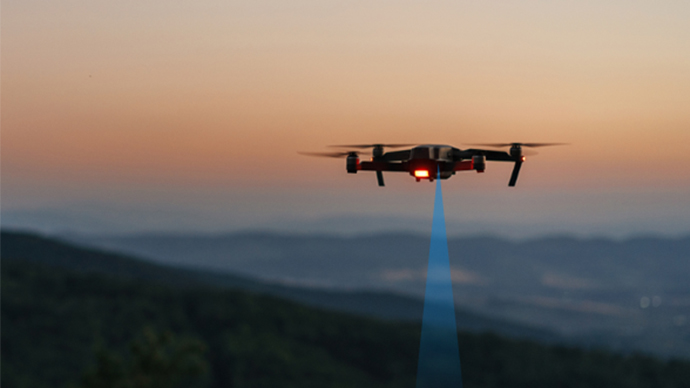
- Tasks include crane spacing, road-vehicle triggering and directional UAV ranging.
Conditions
- Confirm the TF03 range and interface variant, real target reflectivity and output period.
- Weather-compensation features do not replace validation in expected rain, fog, vibration and mounting conditions.
Not applicable scenarios
- For a strict payload limit with host-provided protection, compare TFA170-L.
- For longer working distance, compare TF350.
- Millimeter-level dimensions, planar contours or 3D target shapes call for the appropriate precision or scanning product.
Long-range single-point sensing: payload, interfaces and feedback speed
Define target size, working distance and required valid-range interval before comparing payload, enclosure and interfaces. Directional range feeds flight-control, focus or positioning algorithms; it is not a 3D survey or complete obstacle-avoidance result.
View comparison topicMass comes first, with host enclosure and integration
The approximately 10 g TFA170-L suits payload-sensitive long-range directional input with host-provided protection and power.
Boundary: Check RS-232, 12 V and the delivered version's output rate. Compare TF03 for an enclosure and other interface choices.
View model detailsOutdoor enclosure and multiple interface choices
Compare TF03 when about 86 g is acceptable and IP67 with a compatible interface is needed for a defined target direction.
Boundary: Check range and interface variants separately. If shorter-range models already meet the real distance, compare their lower mass too.
View model detailsHigh update rate with variant-specific enclosure choices
Compare TFA300 series for high-rate UAV or gimbal range input, choosing enclosure versus payload by hardware variant.
Boundary: Do not combine TFA300-L mass and range with TFA300 IP67 into one specification. Check output rate for the same variant.
View model detailsAdditional distance warrants a larger platform load
Compare TF350 when a fixed or larger platform needs more directional distance and can accept about 224 g and its mounting volume.
Boundary: Validate target size, optical-axis jitter and mounting rigidity for the narrow field. For shorter tasks, compare the system benefit of lighter models.
View model details| Parameter | TFA170-L | TF03 | TFA300 Series | TF350 |
|---|---|---|---|---|
| Measuring range | 0.1 ~ 170 m | 0.1 ~ 180 m | — | 0.2 ~ 350 m |
| Detecting accuracy | ± 10 cm (< 10 m), 1% (≥ 10 m) | ± 10 cm (≤ 10 m)1% (> 10 m) | ± 10 cm (<10 m)1% (≥ 10 m) | ± 10 cm (≤ 10 m)1% (> 10 m) |
| Frame rate | 1 ~ 1000 Hz | 1 ~ 9800 Hz | 1 ~ 10,000 Hz | 1 ~ 9800 Hz |
| Interface | RS-232 | UART,CAN,RS-232,RS-485 | UART,CAN | UART,CAN,RS-232,RS-485 |
| Protection | without enclosure | IP67 | — | IP67 |
| Dimensions | 31.0 mm × 30.2 mm × 19.2 mm | 44 mm × 43 mm × 32 mm | — | 78 mm × 67 mm × 40 mm |
| Power consumption | ≤ 1 W | ≤800 mW | ≤ 0.45 W | ≤ 1 W |
| Weight | ~ 10 g | 86 ± 3 g | — | 224 ± 3 g |
| Field of view | < 0.5° | 0.5° | < 0.5° | 0.35° |
| Operating voltage | DC 12 ± 10% V | 5 ~ 24 V | DC 5 V ± 10% | 5 ~ 24 V |
FAQ
What is the maximum measurement range of the TF03?
The TF03 offers two variants: TF03-100 with 100 m @ 90% reflectivity and 40 m @ 10% reflectivity, and TF03-180 with 180 m @ 90% reflectivity and 70 m @ 10% reflectivity. Both models have a blind zone of ≤ 0.1 m, meaning they cannot measure targets closer than 10 cm.
What communication interfaces does the TF03 support?
The TF03 supports three independent hardware interface options: UART/CAN (switchable by command), RS232, and RS485. Users must select the corresponding product model based on their system requirements. All interfaces use 3.3 V TTL logical voltage.
Which tasks suit TF03, and why choose it?
Evaluate TF03 when outdoor equipment needs long-range directional input, a protective enclosure and compatible interfaces, and can accept about 86 g. Tasks include crane spacing, road-vehicle triggering and directional UAV ranging.
What are the accuracy and repeatability specifications?
The TF03 delivers ±10 cm accuracy within 10 meters and ±1% accuracy beyond 10 meters, with repeatability < 3 cm @ 1σ. Distance resolution is 1 cm, and measurements are certified under indoor conditions with a 90% reflectivity diffuse whiteboard target at 25°C.
What is the operating temperature range and IP rating?
TF03 specifies -25°C to +60°C operation, -40°C to +85°C storage and IP67 enclosure protection. Use ambient-light and weather-compensation specifications with the actual range version and test conditions. Validate usable distance and false returns in expected rain, fog, snow and window contamination.
What power supply does the TF03 require?
The TF03 accepts DC 5V ~ 24V power input with average power consumption ≤ 800 mW and peak current < 480 mA @ 12V. This wide voltage range supports integration with battery-powered UAVs, portable robotics, and industrial control systems without additional voltage regulation.
What are the physical dimensions and weight?
The TF03 measures 44.0 mm × 43.0 mm × 32.0 mm with a typical weight of 86 ± 3 g (excluding cable). The 70 cm cable length and compact form factor enable integration into space-constrained platforms such as micro-UAVs, AGVs, and handheld measurement devices.
When should an alternative to TF03 be considered?
For a strict payload limit with host-provided protection, compare TFA170-L. For longer working distance, compare TF350. Millimeter-level dimensions, planar contours or 3D target shapes call for the appropriate precision or scanning product. Confirm the TF03 range and interface variant, real target reflectivity and output period. Weather-compensation features do not replace validation in expected rain, fog, vibration and mounting conditions.
How should TF03 be compared with other models or sensing approaches?
TF03 offers an enclosed long-range integration path; TFA170-L emphasizes a lighter module, while TF350 addresses greater range with more mass. Compare working distance, payload, interface and maintenance conditions.
What platforms and ecosystems does the TF03 integrate with?
The TF03 supports standard industrial communication protocols (UART, RS232, RS485, CAN) enabling integration with Pixhawk autopilots, ROS-based robotics platforms, PLC control systems, and Arduino/embedded Linux boards. The configurable frame rate (1–9,800 Hz default 100 Hz) and compact Molex 7-pin connector (MH1.25-7P-W/B) facilitate OEM integration into UAVs, AGVs, port automation systems, and IoT monitoring devices. Class1 eye-safety certification (IEC 60825-1:2014) also permits deployment in human-occupied environments.
Why might RS485 configuration commands not work on my sensor?
Confirm the model-specific protocol, baud rate, and interface first. A baud rate that is too low for the configured frame rate can overflow the transmit buffer. TF03 TTL/RS485/CAN commands must not be mixed with the Modbus commands for TFmini-i-485 or TF02-I-485; use the model manual.
How do I switch a TF03 between UART and CAN?
To switch UART to CAN, send 5A 05 45 02 A6 and then 5A 04 11 6F to save. To switch CAN to UART, send 5A 05 45 01 A5 over the CAN bus and save. Reconnect using the new interface and the 250 kbps CAN configuration.
How do I change the baud rate on a TF03?
Send the new baud-rate value using the TF03 command format. Disconnect and reconnect at the new baud rate before saving; do not raise the frame rate while the sensor is still running at a baud rate that is too low.
How can I recover a sensor that became unresponsive after a high frame rate or low baud rate setting?
The transmit buffer may have overflowed. Use a Benewake offline downloader with the matching bin firmware and align its probes to the four-pin debug interface using the PCB GND mark. Get support guidance before doing this; in future, raise the baud rate and reconnect before raising the frame rate.
Why does a sensor return a constant 220–230 cm distance with no obstacle?
A nearby infrared source, such as a security camera illuminator, is a common cause. Capture 9-byte raw data including strength, temporarily disable or shield the suspected source, then add shielding, relocate the sensor, or revise the installation.
What should I do when Pixhawk does not recognize a Benewake rangefinder?
Check TX/RX, power, and common ground first. With ArduPilot, confirm RNGFND1_TYPE=20 and RNGFND1_ADDR=0x10 for I2C. Validate the hardware with ArduPilot before investigating PX4 driver compatibility; TF03 CAN also needs 250 kbps and 120Ω termination at both ends.
How can I connect a TF03 RS485 sensor to a cloud platform for silo or tank level monitoring?
Use an RS485-to-TCP DTU as a bridge: connect TF03 to the DTU over RS485, configure the target socket and cloud device, and forward data over cellular or Wi-Fi. Confirm the Modbus/protocol, power, network, and data-security settings for the deployment.
EVIDENCE
TF03
University of Michigan-Dearborn · High-speed ground-truth measurement
- Institution
- University of Michigan-Dearborn
- Model
- TF03
- Use
- University of Michigan-Dearborn · High-speed ground-truth measurement. TF03-100. Original source pages and citations.
- Provenance
- Data in Brief 58, 111205 2024 DOI: 10.1016/j.dib.2024.111205
- Attribution
- Brand-level: Benewake named in the source
TF03
University of Siegen · Communications Engineering
- Institution
- University of Siegen
- Model
- TF03
- Use
- TF03-180 in a published-specification comparison table from the University of Siegen, with full source pages and the original citation.
- Provenance
- Communications Engineering 2, 85 DOI: 10.1038/s44172-023-00137-5
- Attribution
- Brand-level: Benewake named in the source
TF03
Toronto Metropolitan University · MEMS Laboratory
- Institution
- Toronto Metropolitan University
- Model
- TF03
- Use
- Toronto Metropolitan University · MEMS Laboratory. TF03. Original source pages and citations.
- Provenance
- Micromachines 14(10), 1954 2023 DOI: 10.3390/mi14101954
- Attribution
- Brand-level: Benewake named in the source