
TF-NOVA14°×1° Line Beam LiDAR for Wide-Area Robot Obstacle Detection
TF-NOVA LiDAR is the industry's first one-dimensional area detection solution. It achieves wide horizontal sensing from a single static sensor. This provides a much simpler alternative to the mechanical scanners or multi-sensor arrays typically required by conventional point-beam LiDAR. It features a compact design, multiple interfaces, a waterproof lens, and versatility for both indoor and outdoor use. Its extensive command set ensures seamless integration.
Key specifications
- Measuring range
- 14 m
- Frame rate
- 1 ~ 900 Hz
- Interface
- UART, I/O, I²C
- Protection
- IP65
Need help confirming a selection or purchase details?
Applications


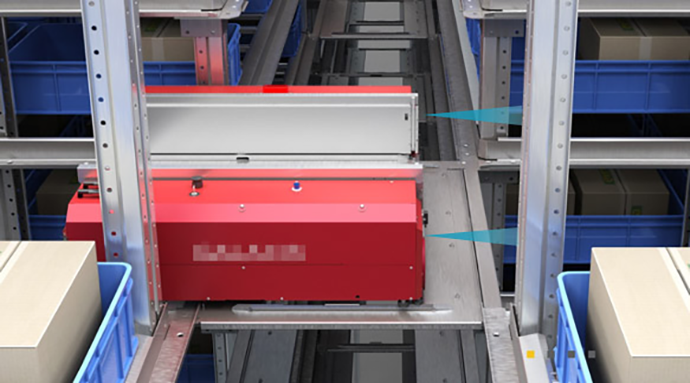
Pallet Transport Robot Obstacle Avoidance

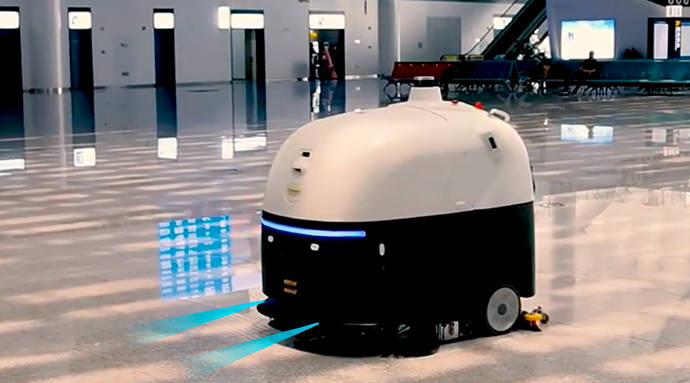
Robot Fall Prevention & Obstacle Avoidance

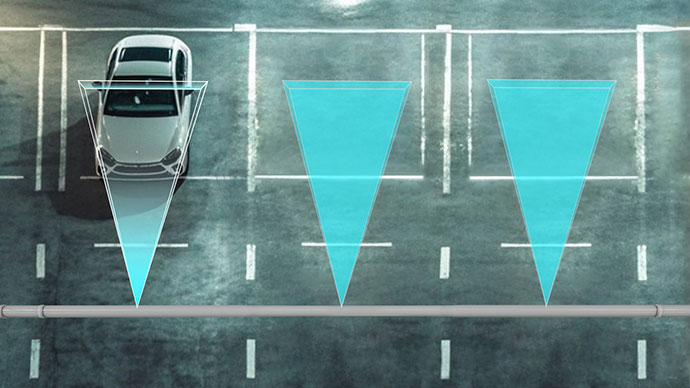
Smart Parking

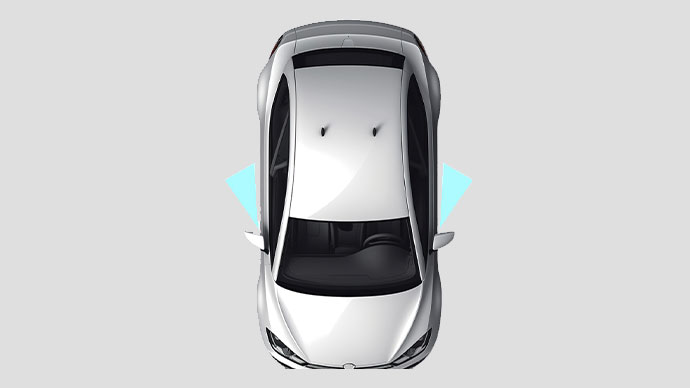
Auxiliary Focus
Full specifications
| Parameter | Value | Parameter | Value |
|---|---|---|---|
| Measuring range | 14 m | Detecting accuracy | ± 5 cm (0.1 ~ 4 m) |
| Frame rate | 1 ~ 900 Hz | Interface | UART, I/O, I²C |
| Protection | IP65 | Dimensions | 26.5 mm × 21.05 mm × 12 mm |
| Power consumption | < 0.5 W | Weight | < 5 g |
| Field of view | 14° (H) × 1° (V) | Output data | One-dimensional Area Detection Solution |
| Operating voltage | DC 5 V ± 5% |
Applicable scope and usage limits
Applicable scenarios
Suitable for standard single-point ranging, robot obstacle avoidance and industrial equipment perception.
Condition: Bounded by the range, accuracy and operating conditions in the product datasheet.
Not applicable
TF-NOVA is not intended for measurements beyond this model's datasheet range, accuracy or interface limits, and is not a substitute for certified redundant safety systems.
Condition: If the target requirement exceeds the specification boundary, complete a selection review or contact technical support first.
Line-pattern sensing or multi-channel distance at close range
Both products can serve close-range sensing, but their output forms differ: TF-NOVA uses a line-pattern spot for area ranging input, while NOVA20 outputs channel-tagged distances in multiple directions. Decide which data form the system actually needs first.
View comparison topicDistance-change input across a line-shaped region
TF-NOVA currently lists a 14°×1° line-shaped field, a 14 m specified range, rates up to 900 Hz and UART, I²C and I/O for doors, vehicles or robots needing horizontal area input.
Boundary: A line pattern is not 20 independent angular channels and does not output object classes or safety decisions; verify what the current IP65 statement protects in the formal document.
View model detailsChannel-tagged distances in multiple directions
NOVA20 specifies 20 channels with distance, strength, channel ID and temperature output over a channel distribution field up to 40°, fitting close-range tasks that must distinguish several directions.
Boundary: The 1 m range is stated at 10% reflectivity and 100 klux, with a 10 Hz frame rate; no protection rating is stated, and channel count alone does not establish system performance.
View model details| Parameter | TF-NOVA | NOVA20 |
|---|---|---|
| Output data | One-dimensional Area Detection Solution | Distance, signal strength, channel number, temperature |
| Measuring range | 14 m | 1 m @ 10% reflectivity, 100 klux |
| Blind zone | — | ≤ 0.1 m |
| Number of channels | — | 20 channels |
| Field of view | 14° (H) × 1° (V) | ≤ 40° (±20°, evenly distributed) |
| Frame rate | 1 ~ 900 Hz | 10 Hz |
| Interface | UART, I/O, I²C | UART |
| Protection | IP65 | — |
| Dimensions | 26.5 mm × 21.05 mm × 12 mm | 25 mm × 21 mm × 14 mm |
| Weight | < 5 g | < 5 g |
| Power consumption | < 0.5 W | < 1 W |
| Operating voltage | DC 5 V ± 5% | DC 5 V ±5% |
FAQ
What is the measurement range of the TF-NOVA?
The TF-NOVA achieves ≥14m range at 90% reflectivity in low-light conditions (0 Klux), ≥13m at 10% reflectivity (0 Klux), and maintains ≥7m at 90% reflectivity in bright outdoor conditions (100 Klux). The blind zone is ≤0.1m, so the usable range spans from 0.1m to 14m depending on target reflectivity and ambient light.
What communication interfaces does the TF-NOVA support?
The TF-NOVA supports three communication protocols: UART (default 115200 baud, 8 data bits, 1 stop bit, no parity), IIC (I²C), and I/O digital outputs. This multi-interface design enables integration with microcontrollers, industrial PLCs, and embedded systems across different platforms.
What applications and use cases is the TF-NOVA best suited for?
The TF-NOVA is specifically optimized for obstacle detection and presence activation trigger applications. Its compact 26.5×21.05×12.0mm form factor, low weight (<5g), and customizable frame rate (1-900Hz) make it ideal for UAVs, robots, smart building automation, and industrial IoT proximity sensing where space and power are constrained.
What are the accuracy and precision specifications of the TF-NOVA?
The TF-NOVA delivers ±5cm accuracy across its primary measurement range of 0.1-4m, with repeatability of <1cm (1 sigma) in the same range. Distance resolution is 1cm, enabling precise distance measurements for safety-critical applications and accurate positioning in robotics.
What are the operating and storage temperature ranges?
The TF-NOVA operates across -25°C to +70°C, supporting both cold outdoor environments and heated industrial settings. Storage temperature range is -30°C to +80°C, and the front window protection level is IP65, ensuring reliability in dusty or humid environments without moisture ingress into the optical system.
What power supply does the TF-NOVA require?
The TF-NOVA requires DC 5±5%V power supply (4.75-5.25V), with average power consumption below 500mW for continuous operation. Peak startup current is <850mA, and startup time is <1s, making it suitable for battery-powered and energy-constrained embedded systems.
What are the physical dimensions and weight specifications?
The TF-NOVA measures 26.5×21.05×12.0mm and weighs less than 5g, making it one of the smallest line-pattern LiDAR sensors available. It uses a standard 1.25mm-5P connector with a 10cm integrated cable, enabling compact integration into confined spaces such as drone frames and miniature robots.
What limitations should engineers be aware of when selecting the TF-NOVA?
The TF-NOVA has no IP-rated housing (protection level N.A.), only the front window is IP65-rated, so it requires protective enclosure for harsh industrial environments. Its ≤0.1m blind zone and 14°×1° divergence angle may limit very-short-range detection and wide-area coverage; performance degrades significantly above 4m beyond the ±5cm accuracy guarantee, and bright sunlight (100 Klux) reduces effective range from 14m to 4-7m.
How does the TF-NOVA compare to other single-point LiDAR sensors like Lightware LW and Garmin LidarLite?
TF-NOVA uses a 14° × 1° line-pattern laser beam rather than a point beam, trading a narrow vertical field of view for wider horizontal obstacle detection. The customer specification lists ±5 cm accuracy only for 0.1–4 m, while detection range reaches ≥14 m under the specified 90% reflectivity and 0 Klux test condition. At <500 mW and <5 g, it targets weight- and power-constrained UAV and mobile robot integration.
What platforms and systems can integrate the TF-NOVA?
The UART, IIC, and I/O interfaces enable integration with Arduino, PLC systems, embedded Linux boards (Raspberry Pi, Jetson), and autopilot stacks via I/O trigger signals. IIC and UART support real-time distance polling at up to 100Hz (customizable to 900Hz), allowing seamless integration into ROS-based robotics platforms and custom firmware-driven obstacle avoidance systems.
Why does TF-NOVA still report the old I2C address after saving a new one?
A known firmware issue can cause the save logic to use the old address. Contact Benewake for the corrected firmware and avoid repeatedly writing unverified address commands.
Why does a sensor return a constant 220–230 cm distance with no obstacle?
A nearby infrared source, such as a security camera illuminator, is a common cause. Capture 9-byte raw data including strength, temporarily disable or shield the suspected source, then add shielding, relocate the sensor, or revise the installation.
Does Benewake provide waterproof housing or structural integration guidance?
Support can provide 3D STEP references for models such as TF-NOVA. A custom enclosure should consider PMMA or optical-glass windows, window thickness and transmission, internal reflections, heat dissipation, and waterproof validation because each can affect ranging accuracy.
EVIDENCE
TF-NOVA
TFmini-S and TF-NOVA in honeybee-inspired navigation research
- Institution
- Delft University of Technology, Micro Air Vehicle Laboratory
- Model
- tf-nova
- Use
- The paper records TFmini-S and TF-NOVA model use in robot-navigation experiments.
- Provenance
- Efficient robot navigation inspired by honeybee learning flights 2026 DOI: 10.1038/s41586-026-10461-3
- Attribution
- Model-level: model named in the source