
TF02-Pro40 m IP65 LiDAR
TF02-Pro supports single-point tasks needing more working distance than short-range modules, with UART/I²C/I/O and IP65 integration.
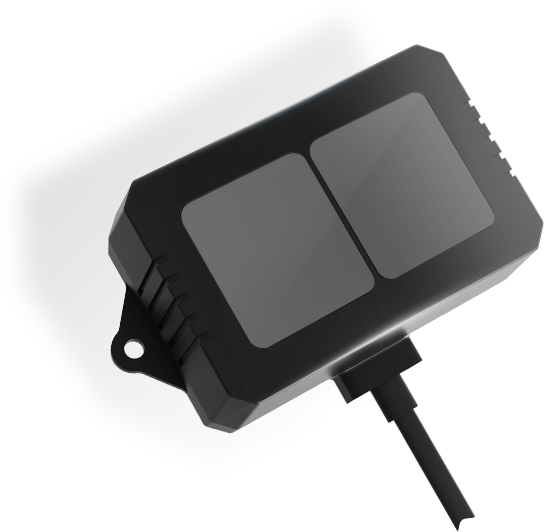
Compact Design
Strong Resistance To Ambient Light
Key specifications
- Measuring range
- 0.1 ~ 40 m
- Frame rate
- 1 ~ 1000 Hz
- Interface
- UART,I/O,I²C
- Protection
- IP65
Need help confirming a selection or purchase details?
Applications


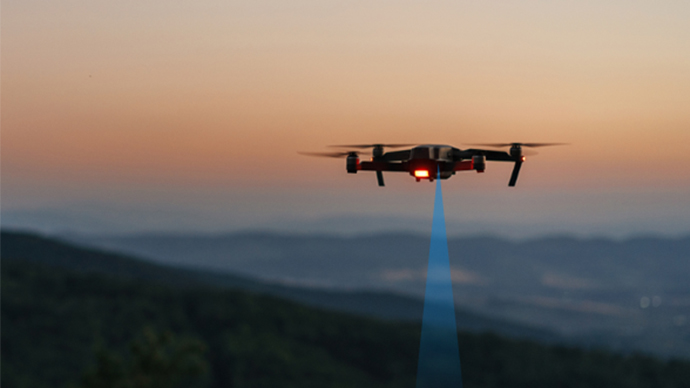
UAV

Security Warning
Full specifications
| Parameter | Value | Parameter | Value |
|---|---|---|---|
| Measuring range | 0.1 ~ 40 m | Detecting accuracy | ± 5 cm @ (0.1 ~5 m) ± 1% @(5 ~ 40 m) |
| Frame rate | 1 ~ 1000 Hz | Interface | UART,I/O,I²C |
| Protection | IP65 | Dimensions | 69 mm × 41.5 mm × 26 mm |
| Power consumption | ≤ 1 W | Weight | 50 g |
| Field of view | 3° | Output data | Single-point Distance Value |
| Operating voltage | 5 ~ 12 V |
Applicable scope and usage limits
Applicable scenarios
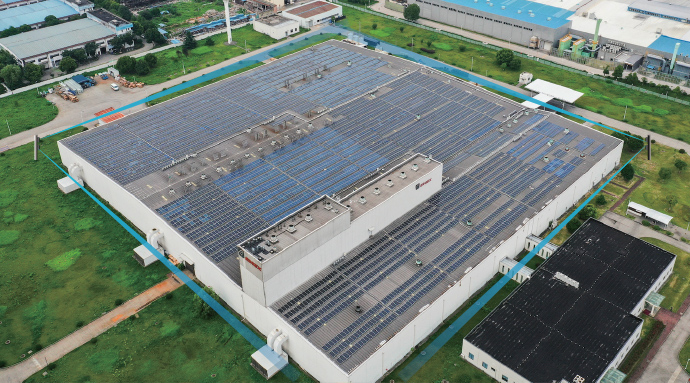
- Evaluate TF02-Pro when equipment needs more forward range than the TFmini family and uses UART, I²C or I/O.
- Tasks include assisted UAV height sensing, equipment spacing and fixed-direction triggers.
Conditions
- Check range margin against actual target reflectivity and lighting, and validate interface output period, optical alignment and supply with the host equipment.
Not applicable scenarios
- For native CAN/RS-485, compare TF02-i.
- For level sensing where dust accumulates on the window, compare the self-cleaning TF02-Pro-W.
- For millimeter-level dimensions or displacement, evaluate a precision measurement sensor rather than substituting more range for required accuracy.
Industrial single-point sensing: controller, range and update rate
First establish whether the controller needs native CAN/RS-485 or UART/I²C/I/O, then compare real working distance and output period. Bus and board-interface models have different tradeoffs and cannot be substituted by shape or headline range.
View comparison topicShort-range tasks on an industrial bus
Compare TFmini-i for native CAN/RS-485, 7–30 V power and a short real working distance.
Boundary: Confirm interface version and protocol. For less mass or a higher update rate, also compare board-interface models.
View model detailsMore working distance while keeping an industrial bus
Compare TF02-i when TFmini-i lacks real working distance and the controller still uses CAN/RS-485.
Boundary: Its maximum update rate is 100 Hz. Check protection documentation and the delivered variant separately from TF02-Pro specifications.
View model detailsBoard-level interfaces with a higher update rate
Compare TF02-Pro when UART/I²C/I/O is suitable and longer directional range with a higher update rate matters.
Boundary: It is not the native CAN/RS-485 version. Effective output period also depends on the interface, configuration and controller processing.
View model details| Parameter | TFmini-i | TF02-i | TF02-Pro |
|---|---|---|---|
| Measuring range | 0.1 ~ 12 m | 0.1 ~ 40 m | 0.1 ~ 40 m |
| Detecting accuracy | ± 6 cm @ (0.1 ~6 m) ± 1% @ (6 ~12 m) | ± 5 cm @ (0.1 ~ 5 m) ± 1% @ (5 ~ 25 m) | ± 5 cm @ (0.1 ~5 m) ± 1% @(5 ~ 40 m) |
| Frame rate | 1 ~ 100 Hz | 1 ~ 1000 Hz | 1 ~ 1000 Hz |
| Interface | CAN,RS-485 | CAN,RS-485 | UART,I/O,I²C |
| Protection | IP65 | IP65 | IP65 |
| Dimensions | 50 mm × 34 mm × 41 mm | 69 mm × 40.5 mm × 31.5 mm | 69 mm × 41.5 mm × 26 mm |
| Power consumption | ≤ 0.8 W @ 12 V | ≤ 0.85 W @ 12 V | ≤ 1 W |
| Weight | 52 g | 60 g | 50 g |
| Field of view | 2° | 3° | 3° |
| Operating voltage | 7 ~ 30 V | 7 ~ 30 V | 5 ~ 12 V |
FAQ
What is the maximum measurement range of the TF02-Pro?
The TF02-Pro can measure distances up to 40 m at 90% reflectivity (e.g., white surfaces), with a minimum range of 0.1 m. At 10% reflectivity (dark surfaces), the maximum range is 13.5 m. Range performance varies depending on target reflectivity and ambient light conditions (tested at 0 Klux indoors and 100 Klux outdoors).
What communication interfaces does the TF02-Pro support?
The TF02-Pro supports both UART and I²C interfaces. UART operates at a default baud rate of 115,200 bps with 8 data bits and 1 stop bit, while I²C operates at up to 400 kbps in slave mode with a default address of 0x10 (configurable from 0x01 to 0x7F). Both interfaces use LVTTL (3.3 V) logic levels.
Which tasks suit TF02-Pro, and why choose it?
Evaluate TF02-Pro when equipment needs more forward range than the TFmini family and uses UART, I²C or I/O. Tasks include assisted UAV height sensing, equipment spacing and fixed-direction triggers.
What accuracy and precision can I expect from the TF02-Pro?
The TF02-Pro delivers ±5 cm accuracy at distances from 0.1 m to 5 m, and ±1% accuracy from 5 m to 40 m. Distance resolution is 1 cm, with repeatability of <2 cm (1σ) for measurements from 0.1 m to 35 m at 90% reflectivity. Specifications are based on measurements at 25°C with standard white board reflectance.
How does the TF02-Pro perform in outdoor and harsh environmental conditions?
The TF02-Pro has an IP65 enclosure rating and operates in ambient light up to 100 Klux, making it suitable for bright outdoor environments. It functions reliably across temperatures from −20°C to +60°C, with storage capability from −30°C to +80°C. Its optimized optical system and algorithm enhance performance in the presence of varying reflectivity backgrounds and temperature changes.
What power supply and power consumption requirements does the TF02-Pro have?
The TF02-Pro requires a DC power supply of 5 V to 12 V. Average current consumption is ≤200 mA with total power consumption ≤1 W, while peak current during operation reaches 300 mA. This low power profile makes it ideal for battery-powered applications like drones and portable robotic systems.
What are the physical dimensions and weight of the TF02-Pro?
The TF02-Pro measures 69 mm (length) × 41.5 mm (height) × 26 mm (width) and weighs 50 g including an 80 cm cable. Its compact and lightweight design allows for easy integration into space-constrained applications such as UAVs, mobile robots, and handheld industrial tools.
When should an alternative to TF02-Pro be considered?
For native CAN/RS-485, compare TF02-i. For level sensing where dust accumulates on the window, compare the self-cleaning TF02-Pro-W. For millimeter-level dimensions or displacement, evaluate a precision measurement sensor rather than substituting more range for required accuracy. Check range margin against actual target reflectivity and lighting, and validate interface output period, optical alignment and supply with the host equipment. If the project requires functional-safety certification, verify the corresponding evidence separately; Class 1 laser eye safety is not functional-safety certification.
How should TF02-Pro be compared with other models or sensing approaches?
TF02-Pro focuses on board-level interfaces and a higher update rate; TF02-i on industrial buses and wide-voltage power; TF02-Pro-W on level-sensing window cleaning. They are not interchangeable by shape or headline range alone.
What platforms and integration ecosystems support the TF02-Pro?
The TF02-Pro integrates with Arduino boards via UART/I²C, supports ROS (Robot Operating System) through standard serial drivers, and is compatible with Pixhawk autopilot systems for UAV altitude control. Its UART and I²C interfaces allow integration with PLC systems, industrial controllers, and embedded Linux platforms (Raspberry Pi, Jetson Nano). Benewake provides UART and I²C protocol documentation for custom firmware development on any embedded platform with standard serial communication capabilities.
How can I switch a sensor back to UART when it is in I2C mode and I have no I2C tool?
Use a USB-to-I2C adapter such as CH341 and BW_CheckWINCC to send the switch command. Some models also support the hardware method on PIN5. TFmini-S, TFmini Plus, and TF02-Pro commonly select I2C with PIN5 tied to GND; follow the model manual to remove that connection or send the matching command when returning to UART.