
VOLUME MEASUREMENT
Dongfang Shuke: How to help agriculture achieve digitization?


Key specifications
Need help confirming a selection or purchase details?
| Parameter | Value | Parameter | Value |
|---|---|---|---|
| Measuring range | 0.1 ~ 12 m | Detecting accuracy | ± 6 cm @ (0.1 ~6 m) ± 1% @ (6 ~12 m) |
| Frame rate | 1 ~ 100 Hz | Interface | CAN, RS-485 |
| Protection | IP65 | Dimensions | 50 mm × 34 mm × 41 mm |
| Power consumption | ≤ 0.8 W @ 12 V | Weight | 52 g |
| Field of view | 2° | Output data | Single-point Distance Value |
| Operating voltage | 7 ~ 30 V |
Suitable for short-range industrial ranging and obstacle-avoidance devices where size, power and cost matter.
Condition: Bounded by the range, accuracy and operating conditions in the product datasheet.
TFmini-i is not intended for measurements beyond this model's datasheet range, accuracy or interface limits, and is not a substitute for certified redundant safety systems.
Condition: If the target requirement exceeds the specification boundary, complete a selection review or contact technical support first.
Confirm the controller interface, cable run and supply first, then compare range, update rate and protection. Model suffixes represent different interface paths; do not assume all three support the same buses.
View comparison topicTFmini-i is currently specified at 0.1–12 m, 7–30 V, CAN/RS-485 and IP65, fitting equipment that needs an industrial bus over a shorter range.
Boundary: Its listed maximum rate is 100 Hz; do not apply UART/I²C capabilities from other TFmini models to TFmini-i.
View model detailsTF02-i is currently specified at 0.1–40 m and 7–30 V with CAN and RS-485, making it a candidate when more range and an industrial controller bus are required.
Boundary: Current product parameters do not state a protection rating; verify the delivered interface version, cabling, termination and site protection.
View model detailsTF02-Pro is currently specified at 0.1–40 m, up to 1000 Hz and 5–12 V with UART, I²C and I/O, fitting controllers that use those interfaces directly.
Boundary: It is not a native CAN/RS-485 model; choose the corresponding variant or validate a conversion path rather than substituting by shape and range alone.
View model details| Parameter | TFmini-i | TF02-i | TF02-Pro |
|---|---|---|---|
| Measuring range | 0.1 ~ 12 m | 0.1 ~ 40 m | 0.1 ~ 40 m |
| Detecting accuracy | ± 6 cm @ (0.1 ~6 m) ± 1% @ (6 ~12 m) | ± 5 cm @ (0.1 ~ 5 m) ± 1% @ (5 ~ 25 m) | ± 5 cm @ (0.1 ~5 m) ± 1% @(5 ~ 40 m) |
| Frame rate | 1 ~ 100 Hz | 1 ~ 100 Hz | 1 ~ 1000 Hz |
| Interface | CAN, RS-485 | CAN, RS-485 | UART, I/O, I²C |
| Protection | IP65 | Not specified | IP65 |
| Dimensions | 50 mm × 34 mm × 41 mm | 69 mm × 40.5 mm × 31.5 mm | 69 mm × 41.5 mm × 26 mm |
| Power consumption | ≤ 0.8 W @ 12 V | ≤ 0.85 W @ 12 V | ≤ 1 W |
| Weight | 52 g | 60 g | 50 g |
| Field of view | 2° | 3° | 3° |
| Operating voltage | 7 ~ 30 V | 7 ~ 30 V | 5 ~ 12 V |
The bus can be overloaded when every sensor keeps its built-in 120Ω termination enabled. Send 5A 05 60 00 BF to disable the sensor-side termination, then send 5A 04 11 6F to save. Keep 120Ω termination only at the two physical ends of the bus.
The TFmini-i achieves a maximum range of 12 meters indoors and outdoors at 90% reflectivity (white board), and 7 meters at 10% reflectivity (black board) under standard 25°C conditions. For outdoor use, the sensor maintains 70Klux ambient light immunity, making it suitable for bright daylight applications.
The TFmini-i provides two industrial-grade interfaces: RS-485 (115200 baud default, 8 data bits, 1 stop bit, no parity) and CAN (250 kbps default, standard frame format with 0x00000003 transmitting/receiving ID). Both interfaces enable seamless integration into distributed industrial control systems.
The TFmini-i is optimized for pedestrian detection, vehicle detection, altitude measurement on drones/aircraft, and robotic obstacle avoidance. Its compact 50×34×41 mm form factor and IP65 rating make it ideal for outdoor robotics, AGV/AMR safety systems, and motion height control in industrial automation environments.
The TFmini-i delivers ±6 cm accuracy at close range (0.1–6 meters) and ±1% accuracy at extended range (6–12 meters), measured with a 90% reflectivity white board at 25°C. Distance resolution is 1 cm across the entire measurement range, providing centimeter-level precision for most industrial applications.
The TFmini-i operates reliably between -20°C and +60°C, supporting cold-weather outdoor installations and heated industrial environments. Storage temperature range extends to -30°C to +75°C, allowing extended dormant storage without affecting sensor performance once returned to operating conditions.
The TFmini-i accepts a wide DC input range of 7–30V, consuming ≤0.8W at 12V typical operation with an average current of ≤65mA. Peak current reaches 100mA during transmission, allowing flexible integration with battery packs, automotive 12/24V supplies, or industrial 24V power rails without additional voltage regulation.
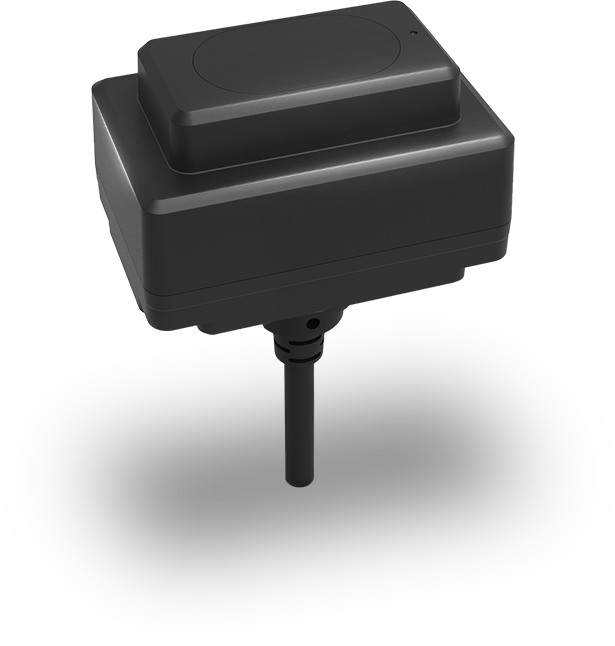
The TFmini-i measures 50mm (L) × 34mm (H) × 41mm (W) and weighs 52g with integrated cables. Cable options include a 70cm harness with 7-pin terminal connector or 200cm without terminal for extended installation distances, making it suitable for compact drone payloads and space-constrained robot mounts.
Avoid the TFmini-i in applications requiring scanning or mapping capability—it is a single-point rangefinder only, not a scanning LiDAR. Its 2° narrow field-of-view and maximum 12m range also make it unsuitable for long-range surveillance (>15m), low-reflectivity target detection (<5% reflectivity), or high-speed automotive ADAS applications requiring wider coverage. Indoor deployment at lighting <0Klux (complete darkness) is also not recommended.
The TFmini-i is the successor to TFmini-S, featuring optimized CAN/RS-485 industrial communication interfaces and a wider input voltage range (7–30V vs. traditional 5V). Both share identical ranging performance (0.1–12m, ±6cm/±1% accuracy), but TFmini-i adds industrial-grade bus protocols for PLC and embedded system integration, making it better suited for factory automation and vehicular CAN networks.
The TFmini-i integrates with Pixhawk autopilots via rangefinder PWM inputs, ROS robotic frameworks through serial protocol drivers, industrial PLCs and SCADA systems via RS-485/CAN, and Arduino/embedded platforms through standard UART serial communication. Its dual-interface design supports vehicle gateway modules, mobile robot navigation stacks, and distributed sensor networks in Industry 4.0 deployments.
Use CANTOOL and send configuration through broadcast station ID 0x00 first. The default baud rate is 250 kbps. Check termination, power, and CANH/CANL wiring before changing the station ID according to the model CAN guide.
First check whether the output has been switched to the 9-byte format. To restore 8-byte output, send 5A 05 05 09 6D, save it as required by the device, reconnect, and verify the response. If the issue remains, provide the raw CAN data, model, and firmware version.
This has been reported in semiconductor cleanroom conditions and needs site-specific analysis. Capture the complete 9-byte raw output with strength/amp values during the event, then provide the model, firmware, and environment to technical support.